- Published on
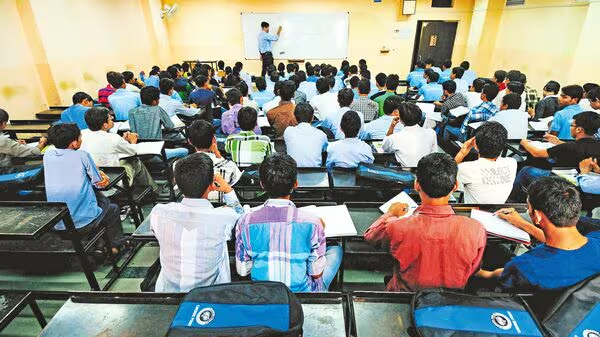
Difference between Classroom and Coaching in India
- Authors

- Name
- Akshahy Kumar
- @ajsuk3
Summary
Coaching Centres vs Schools: The Ministry of Education’s Guidelines and the Mental Health Debate
The Ministry of Education recently announced several guidelines for coaching centres, following concerns over increasing cases of student suicides in India.
The coaching industry generates an estimated ₹6,000 crore annually and is growing at a rate of 7–10% each year. From engineering and medical entrances to language learning and competitive exams—you name it, and there’s a coaching centre for it.
National Education Policy and Its Focus
The National Education Policy (NEP) emphasizes going beyond textbooks and places importance on mental health, learning, and deep understanding. It focuses on nurturing a child’s inner needs—something only schools are truly equipped to develop.
If coaching centres become the foundation of education during formative years, the youth of today may grow directionless, lacking the reflective and innovative mindset needed for future growth.
The Mental Health Crisis
Mental health cannot be measured solely by the number of student suicides. Many acute and chronic psychological conditions remain invisible.
The teenage brain is highly vulnerable, influencing long-term personality development. Adolescents need:
Adequate sleep
Healthy social interactions
Time for reflection and identity building
Space to articulate their needs
Unfortunately, most coaching environments ignore these aspects, pushing students into a culture of stress and unrealistic expectations.
Impact of Coaching Culture
In many cases, children are turning into mindless machines, memorizing and imitating instead of truly understanding. This creates false expectations that lead to anxiety and burnout.
Schools, on the other hand, are designed to help students become:
Purposeful
Reflective
Responsible
Sensitive
Innovative and creative
The current obsession with coaching centres does not encourage original thinking, research, or creativity, all of which are essential for human flourishing.
Why Self-Study Matters
At the end of the day, self-study is the key to success. Coaching centres may provide question banks and practice materials, but students should focus on building their own understanding by:
Solving problems independently
Exploring a variety of books
Engaging in critical thinking and research
Ultimately, it is independent learning, not blind coaching, that leads to long-term success and mental well-being.
Final Thoughts
While coaching centres in India continue to play a big role in exam preparation, the Ministry of Education’s new guidelines are a reminder that mental health, creativity, and balanced development cannot be ignored. Schools and self-study must remain central to shaping well-rounded, future-ready individuals.